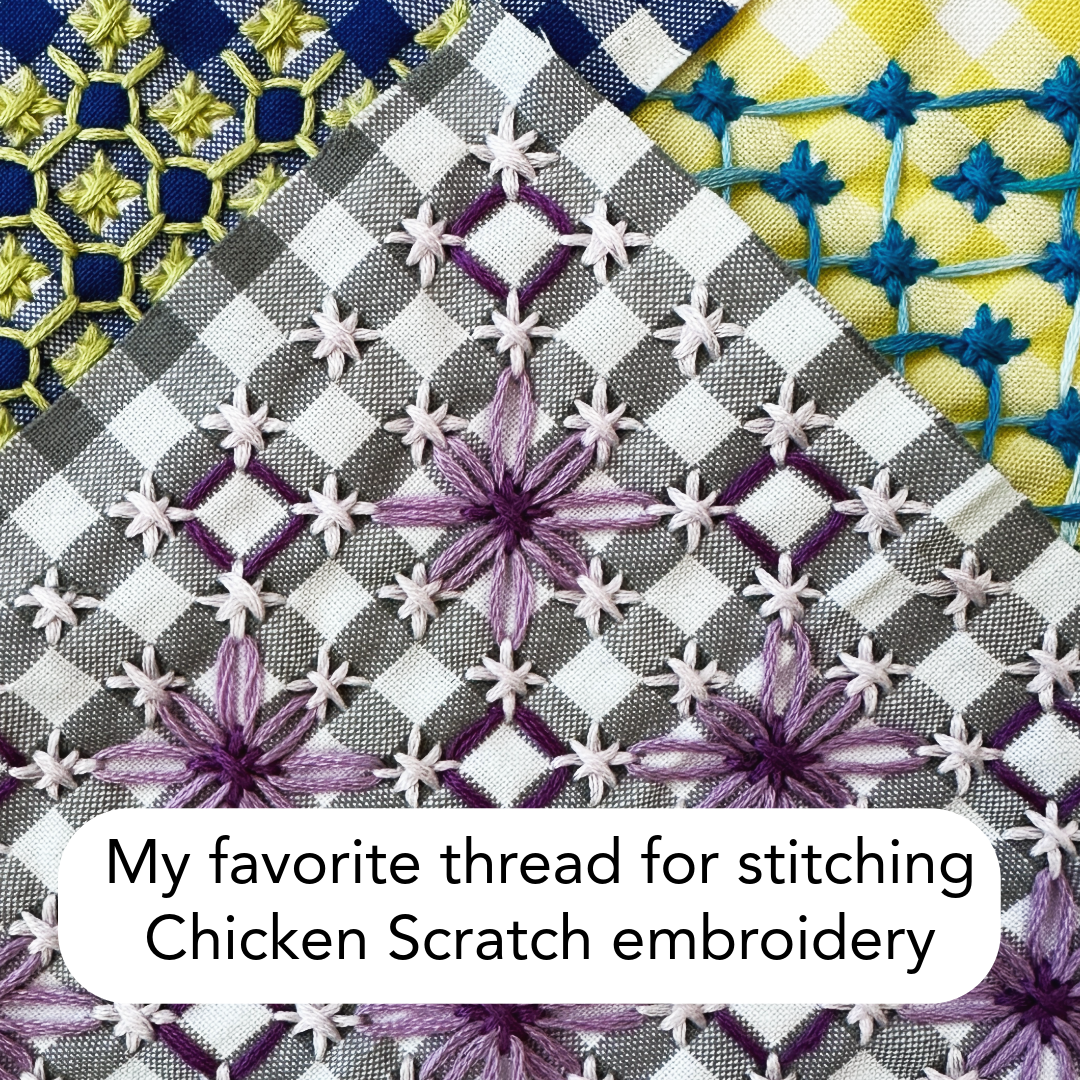
This post will go over the types of embroidery thread I have used to stitch Chicken Scratch embroidery, and why. If you interested in reading more about the gingham fabric I like to use for this type of embroidery, be sure to check out this post.The next part of the discussion is- what type of thread to stitch with? There are so many choices of thread to hand stitch with, and of course, we can use whatever type of thread we like. When I started doing some deeper diving into the tradition of Chicken Scratch embroidery, the vintage pieces I have collected these past several years gave me a great starting point. Keeping in mind these pieces may have been stitched with whatever thread was available to the sewer, we do not really know. But with the knowledge I found in those pieces, I have continued to experiment with all different kinds of embroidery thread. I have found that some types work better than others to give me the overall look I’m hoping for.
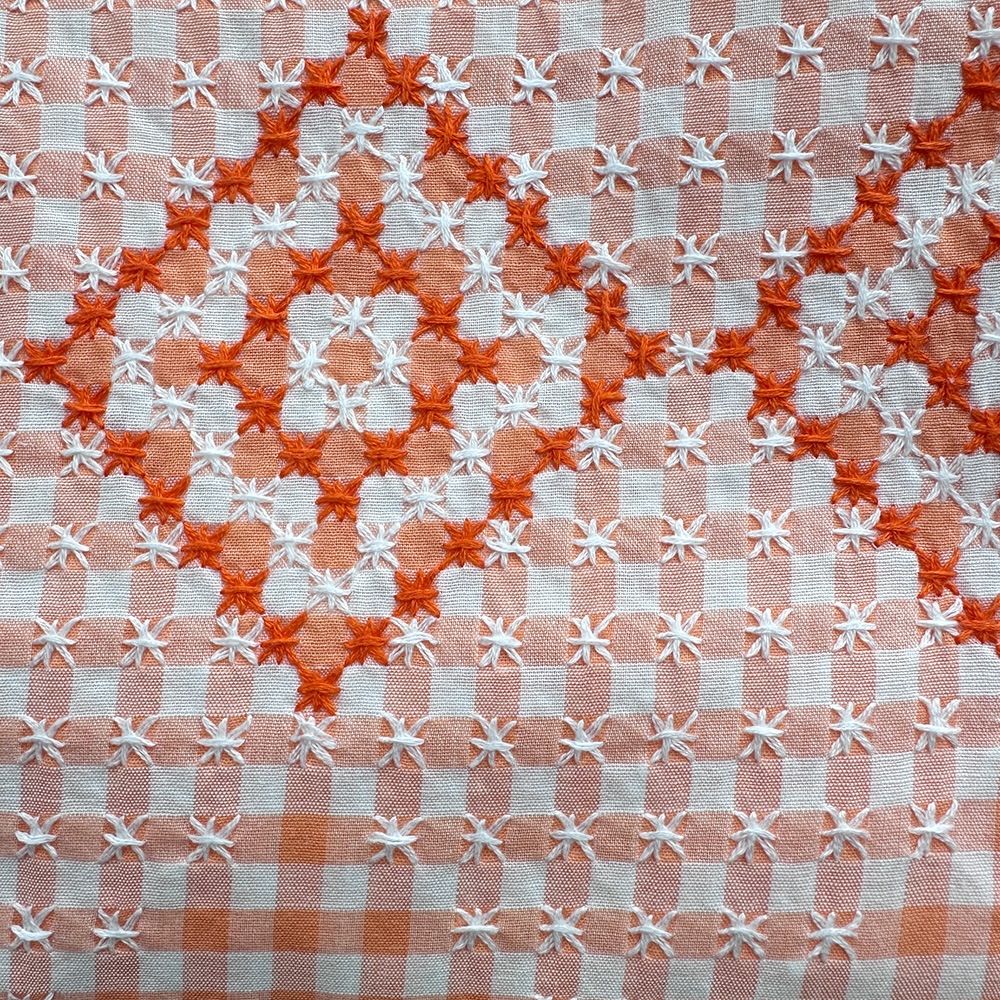
The orange piece pictured above, an apron, is a vintage piece I have. I only have about 5 aprons and I only plan on buying more if I find an absolutely amazing one. All the ones I have, including this one, appear to be stitched with 6-strand embroidery floss. In this one, all the stitches are done with 3 strands, meaning the 6 strands of floss are separated into two sets of 3 strands each. This has come to be what I prefer to use in my own pieces. There are a few reasons-
- I like that using 3 strands on a 1/4″ gingham grid allows the individual stitches, like the smyrna cross stitches in the orange piece above, to show up nicely. Within each square, you can see some stitch detail. Stitching with all 6 strands would make the individual lines of the smyrna cross hard to see, and the overall stitch motif would lack detail. It could possibly just look like a blob of thread.
- Stitching with 3 strands covers most of an individual gingham square color–but not all of it. And I like that a bit of the background color shows through. I think it adds some nice color depth to the stitch pattern. Stitching with all 6 strands would cover more of the gingham square, and more of the background color, and the pattern would be more dense. I haven’t come across a situation that this is an advantage in a motif I am stitching.
- Stitching with 6-strand embroidery floss gives a flatter appearance on the surface of the piece. Because the threads are not twisted together, when I stitch with 3 strands, the individual strands tend to lay side by side, with just a bit of added surface texture on the gingham, but not too much. This is a look I prefer, and it feels more like the vintage pieces I have.
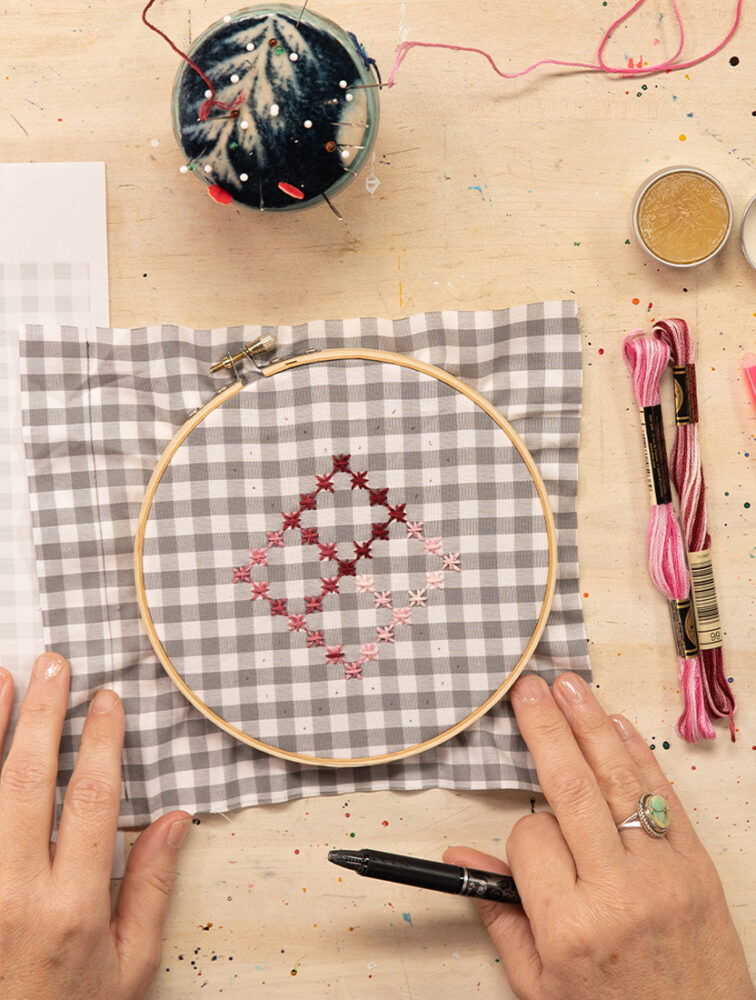
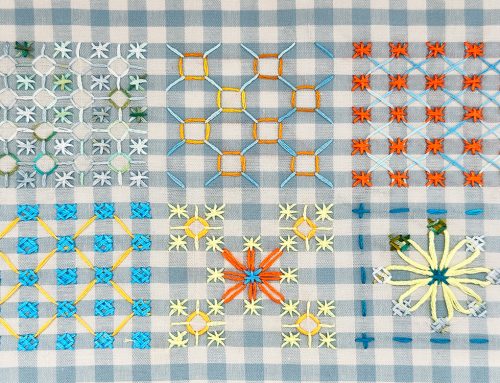
These details may be hard for the inexperienced eye to see, or seem insignificant. But after the many hours of stitching I’ve done, I can definitely tell the difference, and have come to love the look of 3 strands.The image above is from my 31 day daily practice class over on Creativebug (31 days of learning Chicken Scratch embroidery!) and I used 6 strand embroidery floss separated into two sets of 3 strands for all of the patterns.
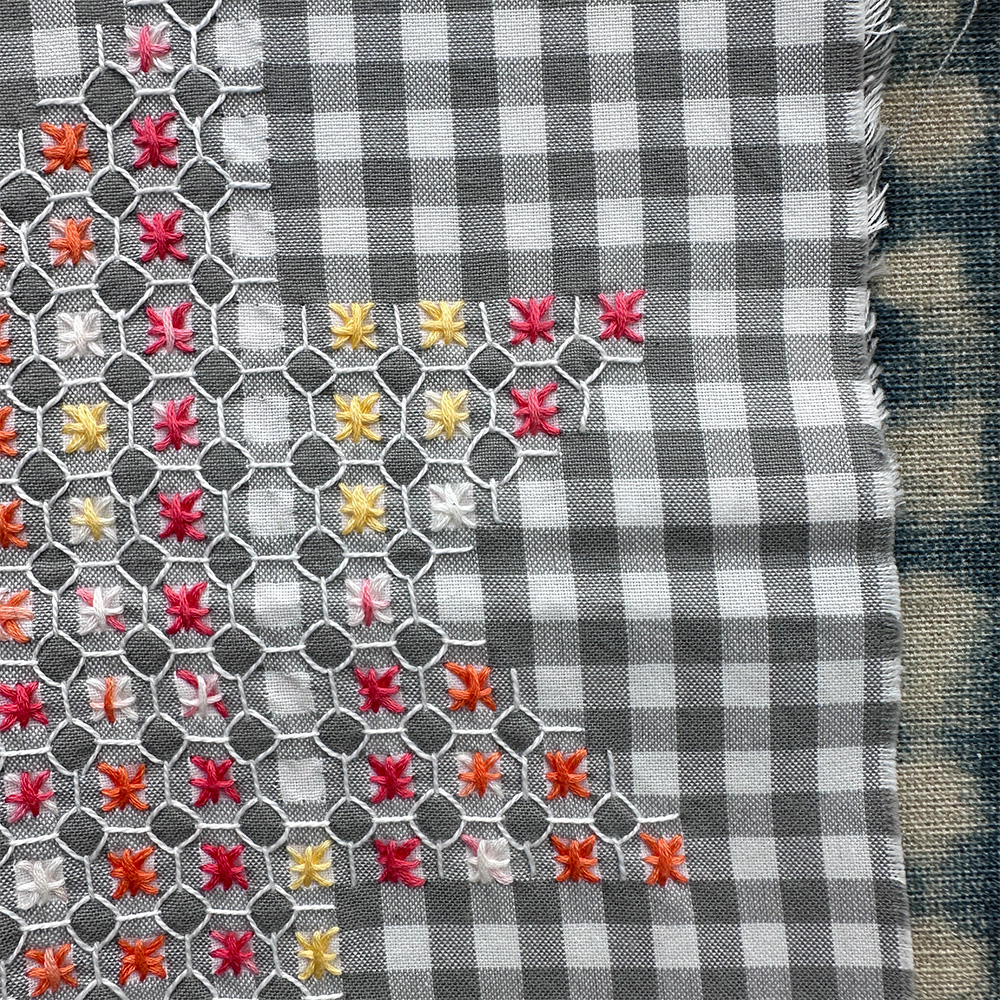
I designed my first Chicken Scratch Embroidery Block of the Month quilt back a few years ago and had a wonderful group of stitchers participate! Together, we experimented with different threads and any different ginghams that we could get our hands on (pesky pandemic and supply chain issues). In the photo above, I tried stitching part of the pattern in Size 8 Perle Cotton thread. (The colored stitches are my favorite 3 strands of embroidery floss, and the white areas are stitched with the Perle cotton.)
Perle cotton has a ply (twist). It won’t “flatten out” over the gingham the same way 3 strands of floss used together will. I also found this type of thread wasn’t generally forgiving, and not great at camouflaging stitches that weren’t perfectly perfect. For these reasons, I decided size 8 Perle cotton was not my favorite.
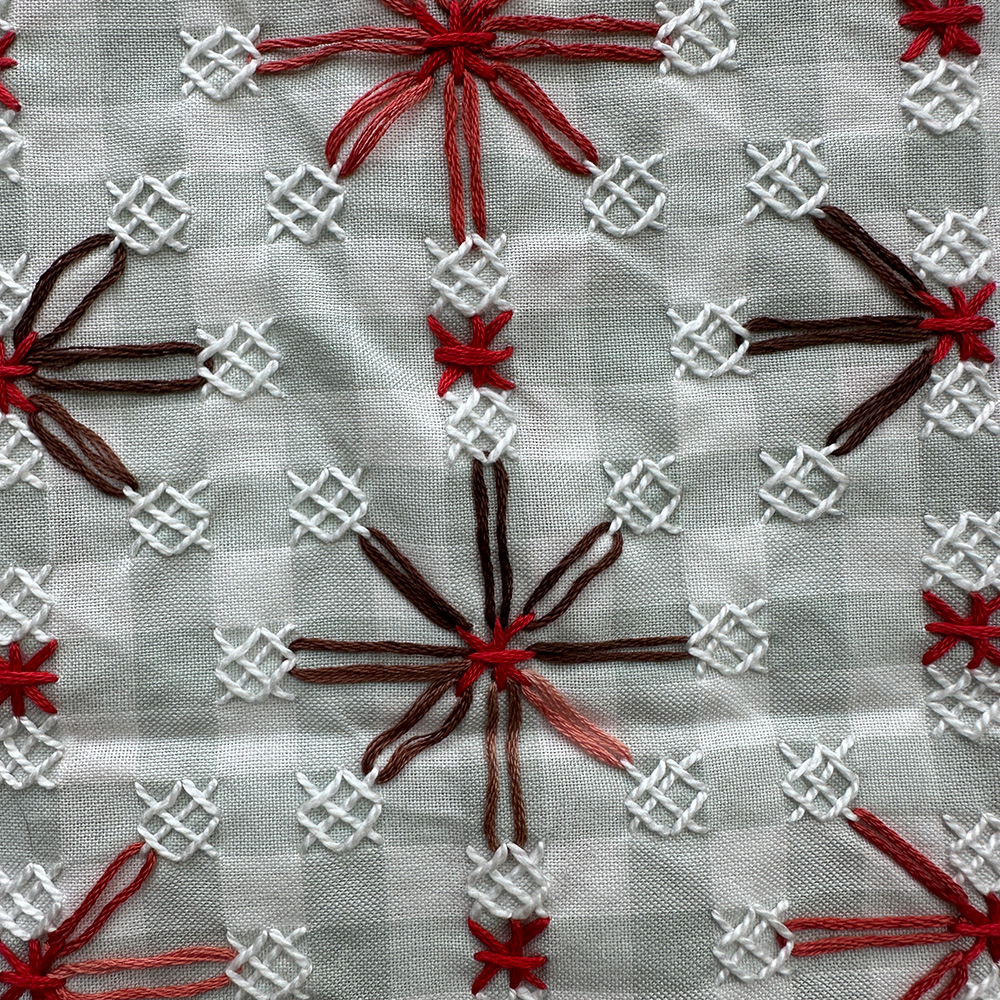
A few of us also tried using Size 5 Perle cotton, which is the white thread in the pattern above. I personally wasn’t a fan of that either, I didn’t love the twisted look of the strands, and it was definitely bulkier than I wanted.
Interesting to note, the pattern above is also stitched on a gingham grid larger than 1/4″, which we were also experimenting with in that same BOM. I think the overall look is just not as neatly stitched as 1/4″ grid. We were kind of sad about that because there were some beautiful colors available in that larger gingham.
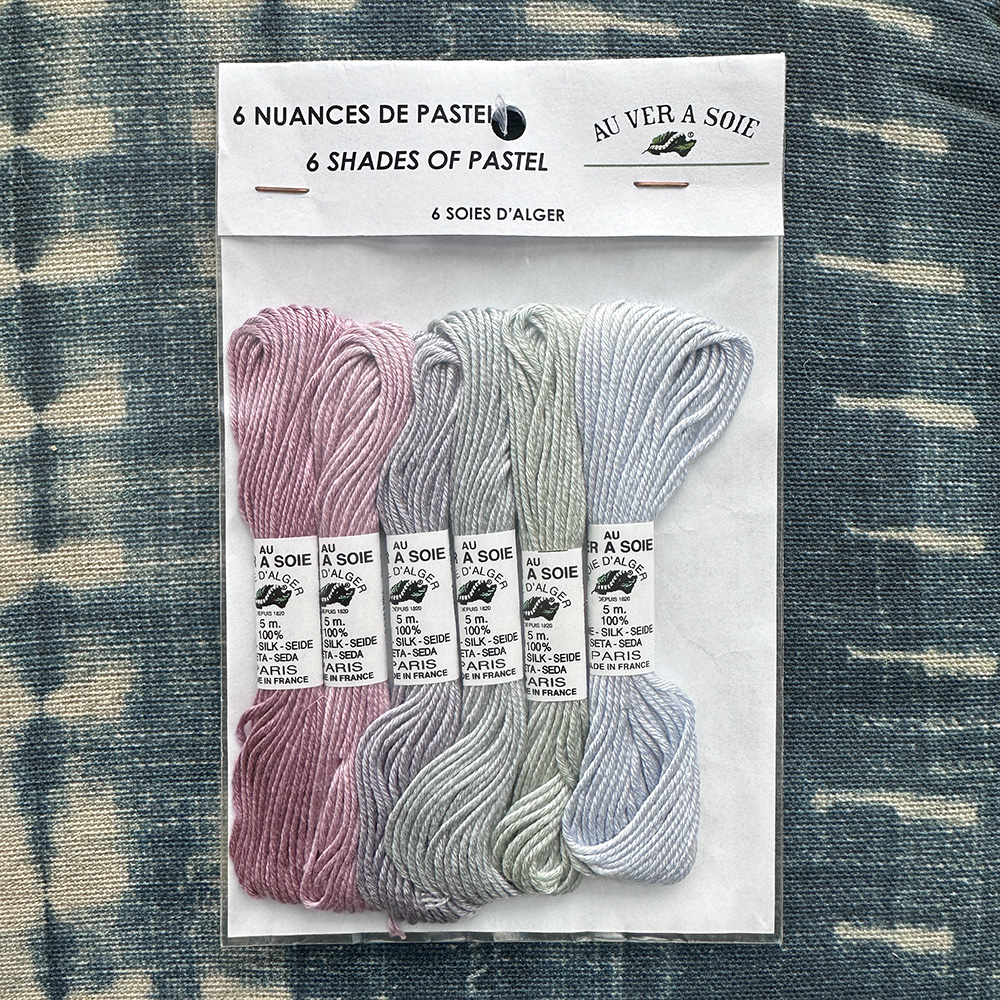
Even though I have a preferred thread, I am still experimenting. I’ve tried wool embroidery thread, but the texture against the cotton gingham felt too fuzzy and I also just personally don’t like stitching with wool thread. I just received some 7 strand hand dyed silk thread (pictured above) that I will be trying to see how I like. I think there’s potential! I could see myself liking the sheen of the thread. I will report back.
And my favorite of the 6-strand embroidery floss category? I LOVE variegated thread! There are so many types of variegated thread–ones with short color changes, and ones with longer color changes. I love them all and use them whenever I can.
Cosmo Seasons variegated floss from Japan is available in my shop, and also DMC . Both are very similar to stitch with, beautiful quality and color selection.
I also love to stitch my Chicken Scratch embroidery in very contrasting colors from the base cloth. I like for the stitching to show up!